Places · 万古
Banko
A name on a stamp, from teapots to the bonsai pot
Banko ware began as a merchant’s kiln near Kuwana in Ise. It took its name from a stamp reading 萬古.
Banko ware began with a merchant’s kiln near Kuwana in Ise, and took its name from a stamp. It was revived more than once, spread to many kilns around Kuwana, Yokkaichi and Matsusaka, and became best known for teapots. This page follows that line to the small number of bonsai pots recorded from Banko, the potters linked with them, and what a Banko mark can and cannot tell you.
00 · At a glance
Banko, in four points
Beginnings
Around 1736–41
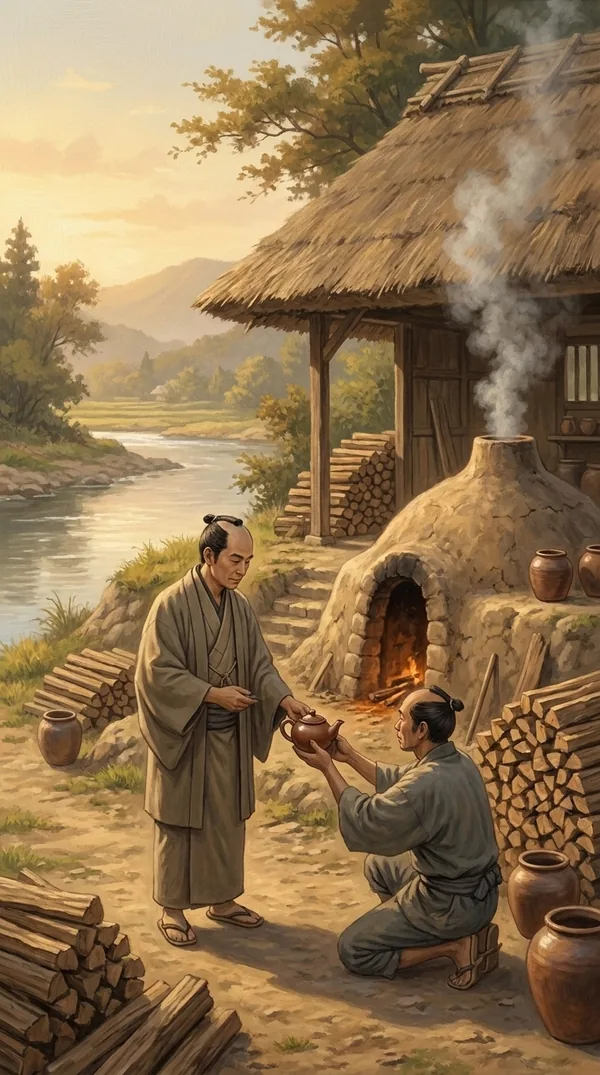
Banko ware is said to have begun when a wealthy merchant of Kuwana, in Ise, built a kiln in the Genbun era.
The name
A stamp
The lord of the domain allowed him a stamp reading 萬古 — “Banko”.
Revivals
1830s and 1850s
After a break, the ware was revived in the Tenpō era and again at the start of the Ansei era.
Bonsai pots
Few, and hard to place
Bonsai pots seem to have been made from the Meiji era on, but they are few, and their makers and dates are mostly unclear.
01 · 万古焼のはじまり
A merchant’s kiln, and a stamp
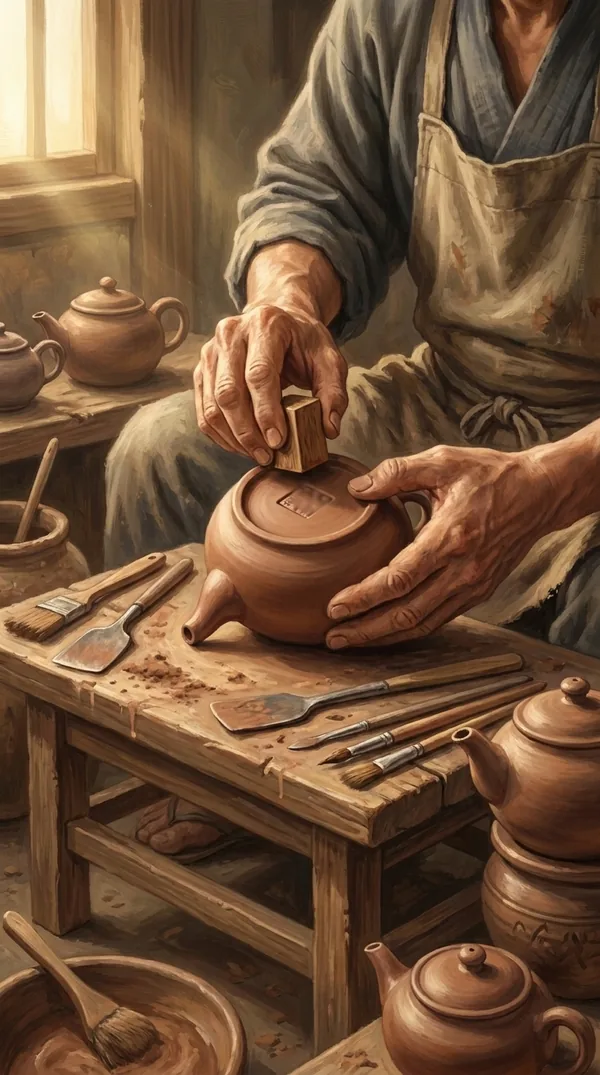
The story begins with one man. Nunami Rōzan 沼波弄山, a wealthy merchant of Kuwana in Ise, is said to have built a kiln at the village of Asahi in the Genbun era.
-
1736–41
A kiln near Kuwana
Rōzan builds a kiln at the village of Asahi. This is given as the beginning of Banko ware.
-
Then
The stamp
The lords of the domain, the Tōdō family, allow him a stamp reading 萬古.
-
Later
To Edo
He moves to Edo and works around Mukōjima Koume.
Ko-Banko
古万古
“Old Banko” — the name given to Rōzan’s own work.
Edo Banko
江戸万古
The name given to the ware made in Edo.
02 · 再興と広がり
Revivals, and a town of teapots
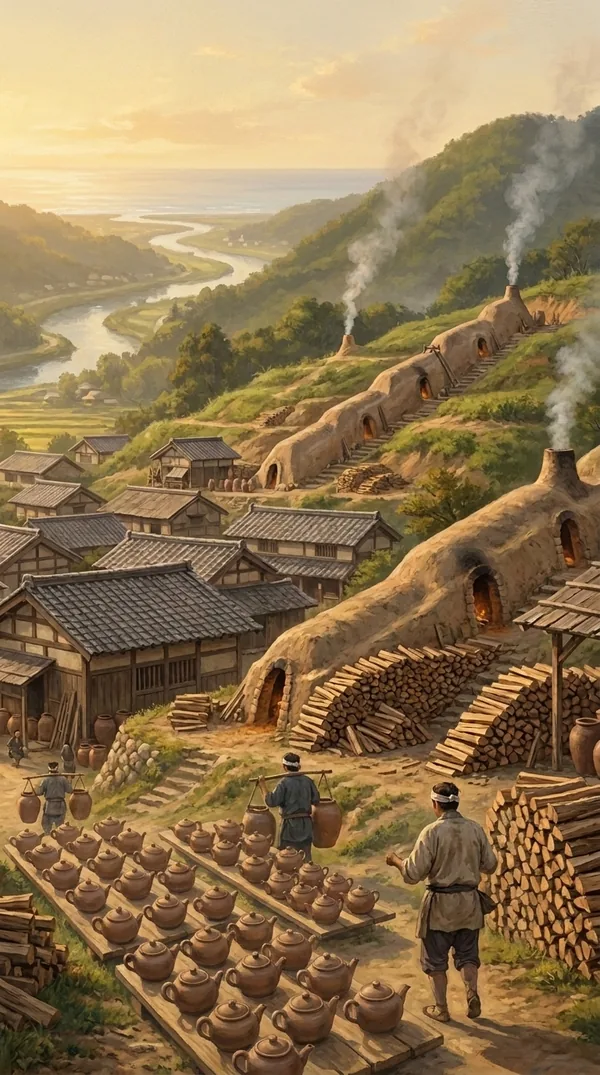
Banko did not run unbroken. After a break, it was started again — twice — and then spread far beyond one kiln.
-
Around 1830–44
有節万古
In the Tenpō era, 森有節 revives the ware. His line is called 有節万古.
-
Early in 1854–60
射和万古
At the start of the Ansei era, 竹川竹斎 starts a kiln following the old methods. This is 射和万古.
-
After that
Many kilns
Banko kilns multiply, centred on Kuwana, Yokkaichi and Matsusaka. Ware named “something Banko” — after a place, a person or a shop — is made in great quantity.
-
From the Meiji era
New Banko
The ware comes to be called “new Banko”, 新万古, known for brownish unglazed stoneware teapots.
03 · 土と製法
Clay and making
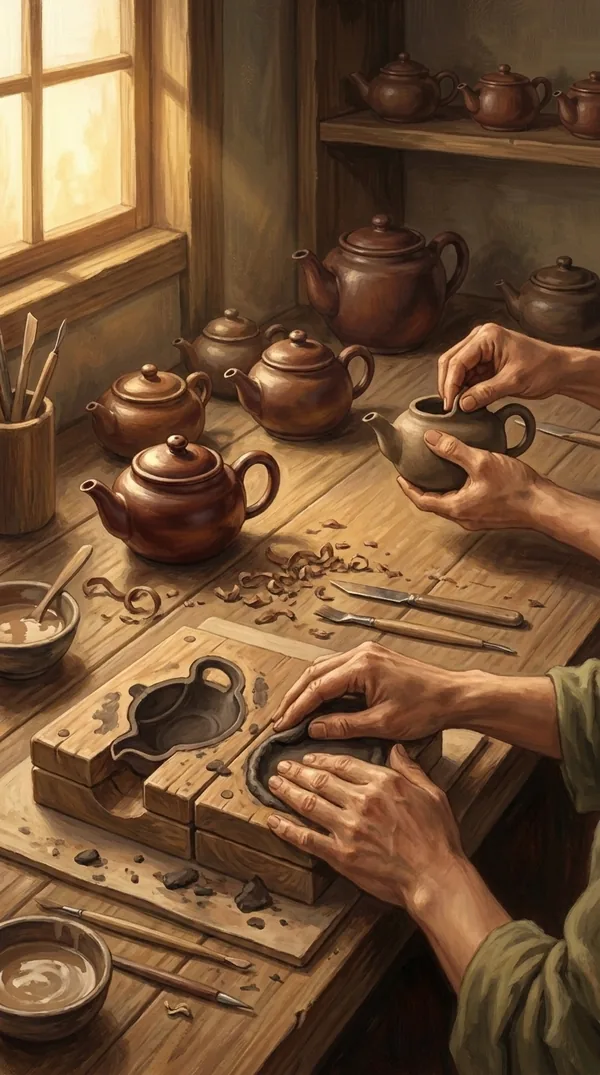
Teapots were at the centre of Banko production, and the record describes how they were made. The points below are drawn from that record and from the pots in it; they are not a description of every Banko piece.
Making
Moulded and hand-pinched
The main products were teapots, made in moulds or pinched by hand.
Bonsai pots
Mostly unglazed
Most Banko bonsai pots are unglazed stoneware, 焼締. Some are glazed.
Colour
Painted, now and then
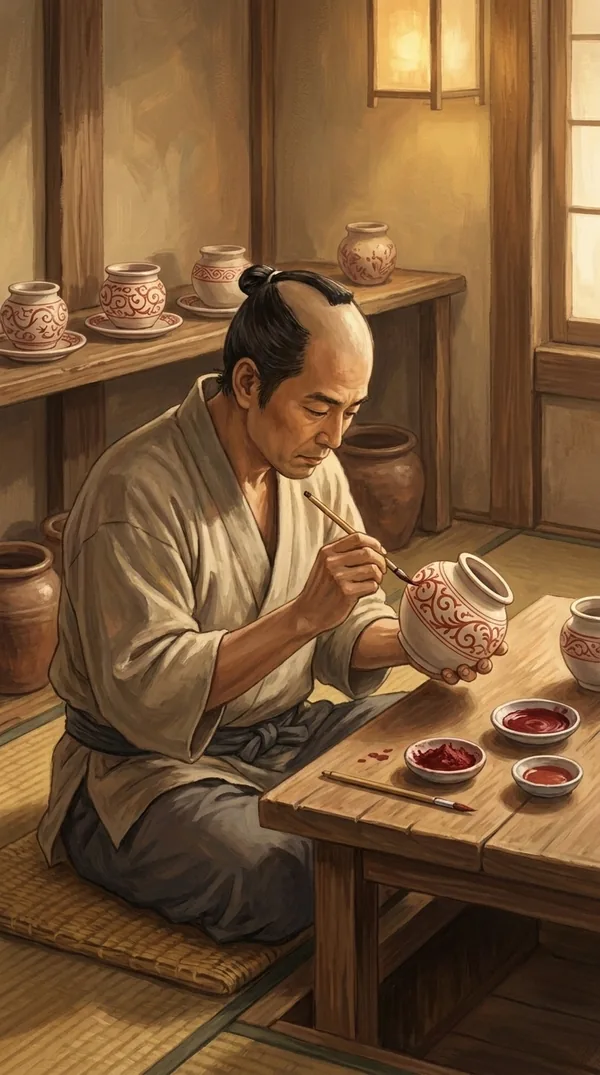
Small painted pots are seen from time to time: red-painted aka-Banko 赤万古 and blue-painted ao-Banko 青万古.
After the war
Slip-casting
Cheap everyday pots made by slip-casting — clay slip forced into plaster moulds — were mass-produced only after the war.
04 · 赤絵と意匠
Red and blue
Some recorded Banko pots are painted. What the record says about them, in its own careful terms:
Banko red
Arabesque
A small round pot with an outer rim, painted with red arabesque scrolls and marked 万古, is described as so-called Banko aka-e. There is also Banko ao-e, painted in a pale blue.
An orchid pot
Landscape panels
A tall pot with painted landscape panels, marked 寿山, is also counted as Banko red-painted ware.
A copy?
After a late-Ming bowl
An orchid pot marked 松阪万古 carries what look like goldfish, the character 魁 and many swirls. The record suggests the fish may be dragons and the swirls broken-down cloud scrolls, and that the pot is probably a copy of a late-Ming red-painted bowl.
05 · 盆器
Banko bonsai pots
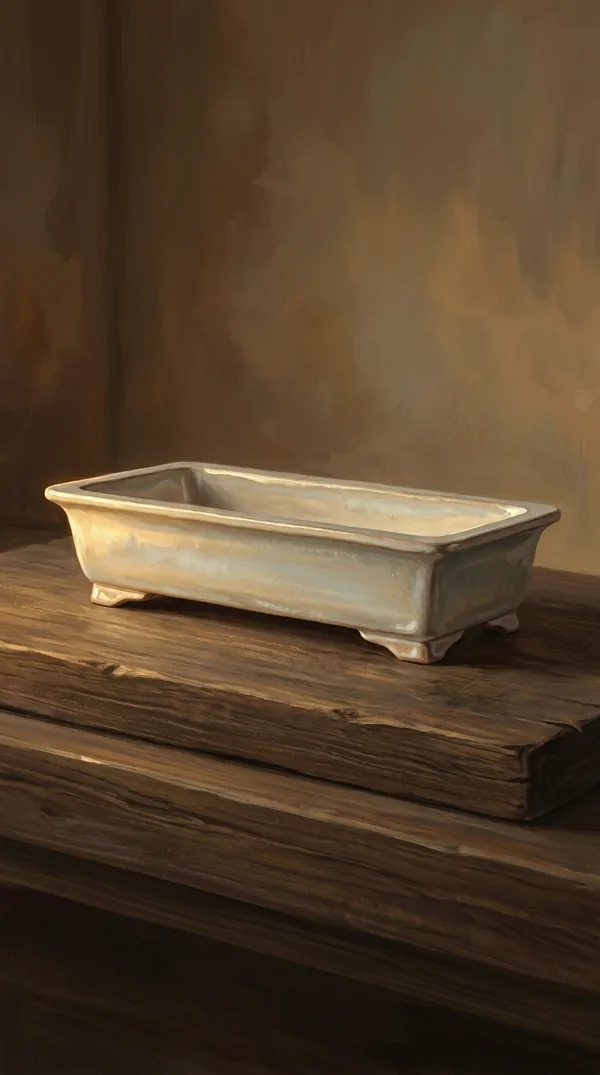
Bonsai pots seem to have been made in Banko from the Meiji era on, but they are few, and the makers and dates of most of them are unclear. A small group is recorded:
Unglazed
A rectangle by 東流
An unglazed rectangle with an outer rim and cut corners, 12.2 cm long, made in the 1950s or early 1960s. Its form follows a model of 尚古堂 and is described as well put together; unglazed stoneware, the record notes, is the Banko tradition.
Pale glaze
Shiro-Banko
A long, very thin rectangle with a flared rim, 49.5 cm, under a slightly cloudy clear glaze. Maker and date are unknown. Long known in the bonsai world, it is the pot people mean when they simply say Shiro-Banko 白万古.
Green glaze
A dated pot
A green-glazed rectangle with straight sides and rounded corners, 14 cm, by 東流. Its base is incised with the Olympic rings, 1964, and words marking the Tokyo Olympics.
Painted
Small red pots
A red-painted round pot only 9.4 cm across, and two painted orchid pots, 15 and 18.2 cm.
A clue to date, not a rule
Because cheap slip-cast pots were mass-produced only after the war, that method of making is itself a point of date. It is one clue among others, not a way to date every pot.
06 · 作家と窯
Potters and kilns
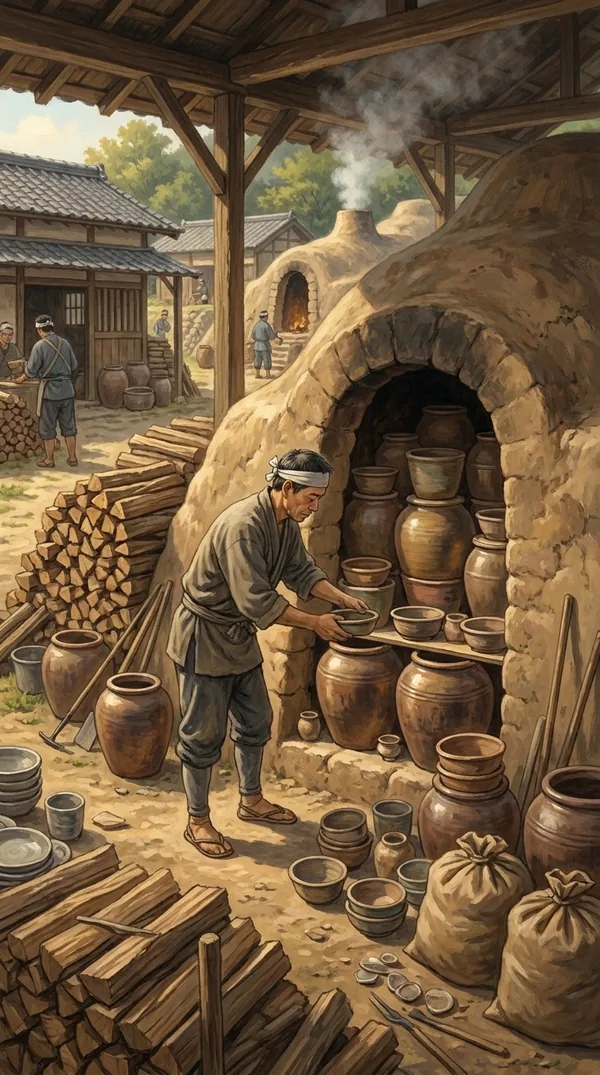
These are the potters the record links with Banko bonsai pots. None of them has a page of their own on this site yet.
東流
A potter surnamed Yamamoto, who died in 1968 at 56. He supplied formed clay bodies to Banko kilns, and made pots by hand for his own bonsai, which the kilns he worked with fired for him in the gaps between their wares. He showed them at the exchange meets he liked, they were noticed, and he seems to have let them out a few at a time.
万古春山 — Banko Shunzan
Born 1936 in Mie, into a Banko kiln family. He set up on his own in 1967 with an electric kiln, later adding gas and oil kilns, and began making plant and bonsai pots around 1970. He blends Yokkaichi clay with clays from elsewhere and makes mostly glazed pots, by hand and on the wheel. Drawn to Song and Yuan ceramics, he studied tenmoku, celadon, white porcelain and Jun glazes. His mark is 基.
金森西峰
Born 1915 in Mie. He entered the ceramics trade soon after primary school, set up on his own in 1974 and turned to small pots in 1980. His work is known for drawing on his experience of Banko ware. His mark is 西峰.
The places named are Kuwana, Yokkaichi and Matsusaka, where Banko kilns multiplied after the revivals.
07 · 落款と見方
Reading a Banko mark
Banko took its name from a stamp, and many Banko pieces carry the name. On its own, the word Banko names the ware; it does not by itself name a maker.
Recorded marks
The name, with additions
Marks recorded on Banko pieces include 万古, 松阪万古, 大日本萬古布山, 萬古公佳園, 日本万古茂福造, 萬古洞水 and 万古東流, among others.
Place or person
Read the addition
Many Banko names add a place, a person or a shop to the word Banko. The addition is what may point to a kiln or a maker.
A dated base
1964
One green-glazed pot by 東流 is incised with the Olympic rings, 1964, words for the Tokyo Olympics and the mark 東流作 万古.
Potters’ seals
Not always the name
Banko Shunzan marks his pots with 基, not with his potter’s name. 金森西峰 uses 西峰.
These are documented forms, not a complete list, and a mark is evidence to weigh, not proof. The marks index sets out the marks recorded so far on this site. If a mark puzzles you, send us a clear photograph and we will tell you what it says — we do not issue authentications.
08 · YAKUMO と万古
Banko at YAKUMO JAPAN
Our eBay store has no separate Banko section. Banko pots we list are found in the Other Japanese Pots section; the link below opens it, so it always shows what is available now. The pictures on this page are illustrations, not pots for sale.
Browse Other Japanese Pots on eBay →
Listings ship from Tokyo; destination availability and terms are shown on eBay.
09 · Continue
Keep reading
The marks, clays and forms on this page each have more to say on their own pages.