Places · 備前・伊部
Bizen
Bare clay, from farm jars to the bonsai pot
Bizen ware is bare clay, fired in long climbing kilns at the village of Inbe. It is counted among Japan’s Six Old Kilns.
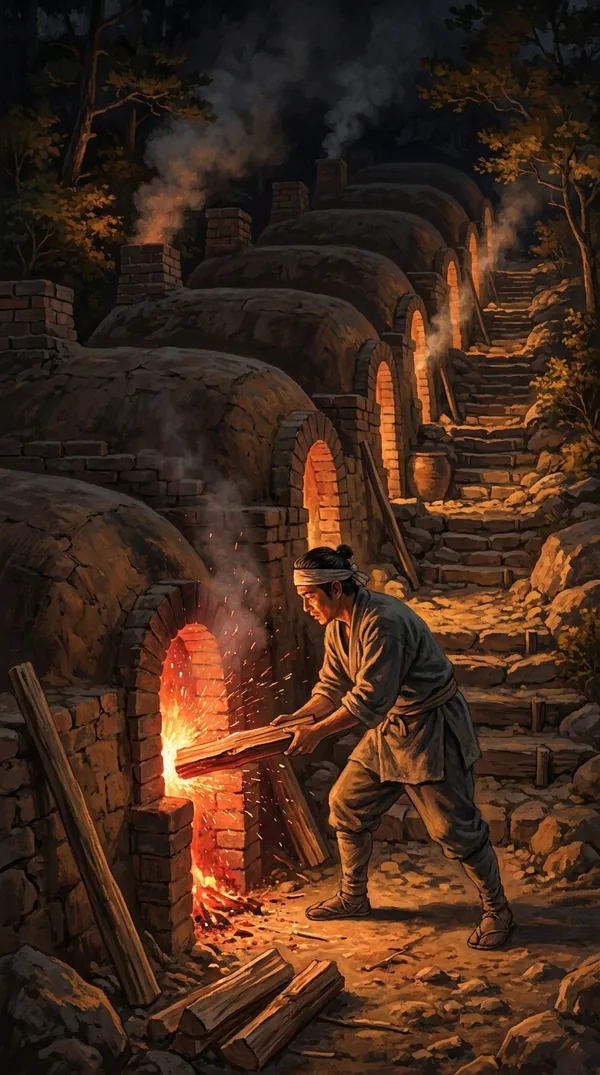
Bizen ware is counted among Japan’s Six Old Kilns. Its potters fired jars for the farm in long climbing kilns at the village of Inbe, made wares later prized in the tea room, and, after a decline in the Meiji era, were revived in modern times. This page follows that line to the unglazed bonsai pots recorded from Bizen, explains what the name “Inbe” means, and shows how to read a Bizen mark.
00 · At a glance
Bizen, in four points
Standing
One of the Six Old Kilns
Bizen is counted among Japan’s Six Old Kilns. Its origins go back before recorded history.
Beginnings
Around 1394–1428
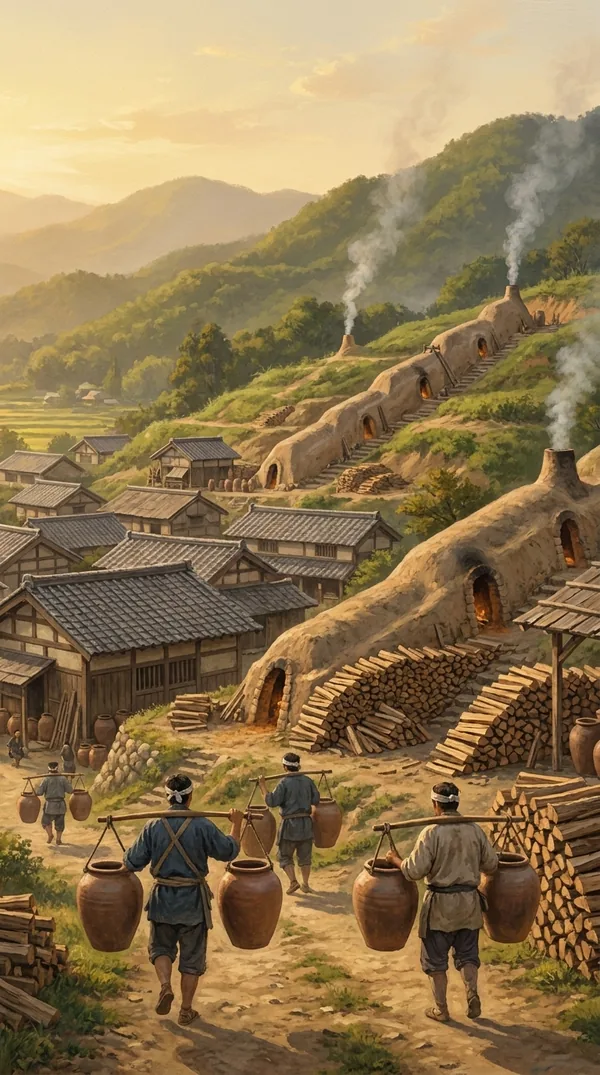
Pottery making in earnest began around the Ōei era, with farm wares fired in three long climbing kilns at the village of Inbe.
The tea room
Late sixteenth century
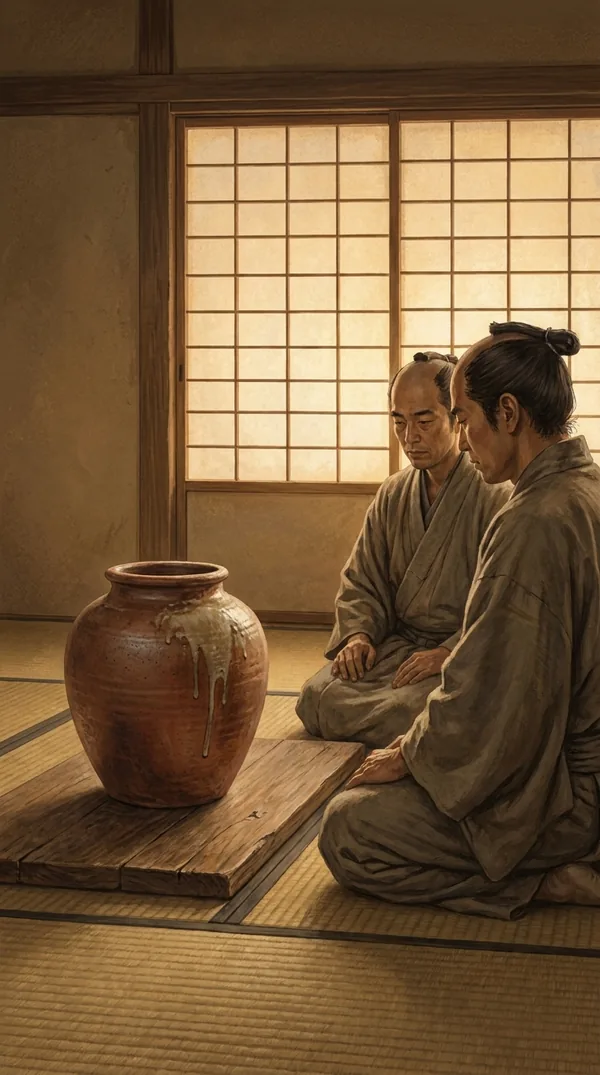
Around the Tenshō era (1573–92), tea jars and tea bowls were being made, and tea men of the time prized Bizen wares.
Two names
Bizen and Inbe
Bizen ware is the general name. Inbe ware is a part of it, not a separate place’s ware.
01 · 備前焼のはじまり
Before the tea room: jars for the farm
Bizen ware is one of Japan’s Six Old Kilns, and its origins go back before recorded history. Its story as a pottery trade begins with plain, useful things.
-
Around 1394–1428
Three long climbing kilns
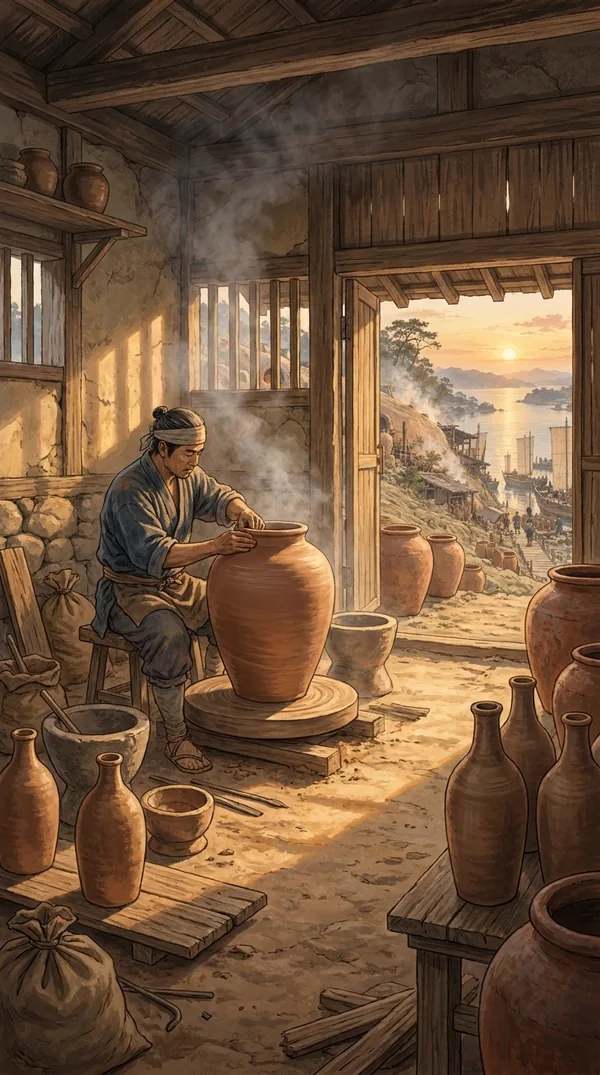
Pottery making in earnest began around the Ōei era. At the village of Inbe 伊部, three long climbing kilns fired farm wares such as seed jars.
-
Afterwards
Wares for the household
The potters went on to make everyday wares such as flower vases and sake bottles.
-
1573–92
For the tea table
Around the Tenshō era of the Momoyama period, tea jars, tea bowls and ornaments were being made.
02 · 茶陶
The tea room
The tea men of the Momoyama period prized Bizen tea wares as fitting for the taste of wabi and sabi — a quiet, unadorned beauty.
The record says no more than that about the tea room, and we do not add to it. What matters here is the line it draws: from jars for the farm, through wares for the tea room, to the small pots made later for trees.
03 · 衰微と復興
Decline, revival and the potters named
-
Mid-Edo period
At its height
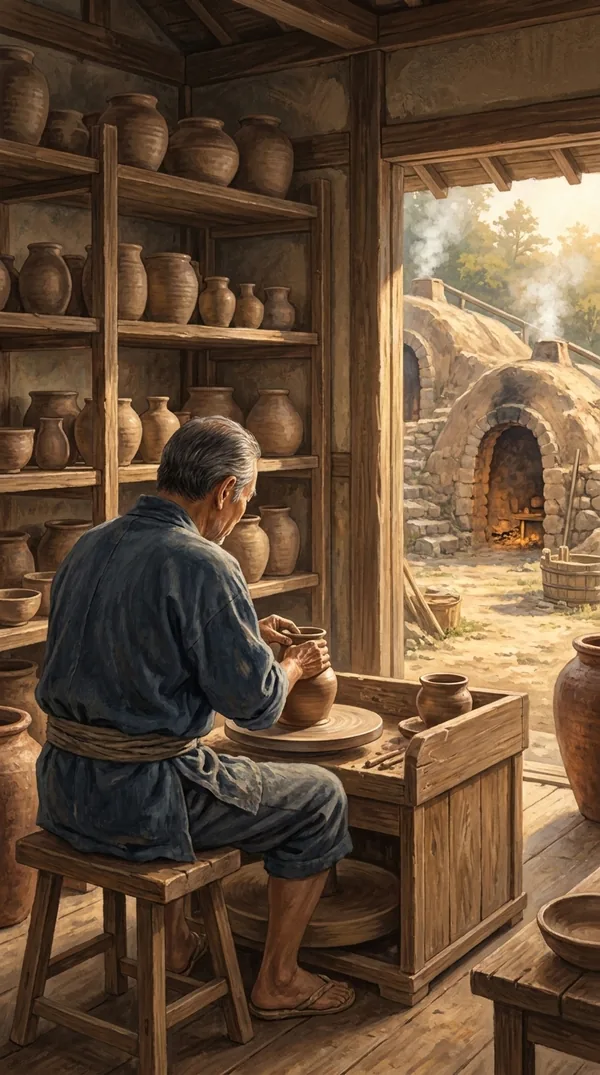
As a pottery trade, Bizen was at its busiest in the middle of the Edo period.
-
From the Meiji era
Decline
With the Meiji era, Bizen ware went into decline.
-
Modern times
Revival
It was revived in earnest through the work of potters such as 金重陶陽 and 藤原啓, both Living National Treasures. That revival laid the foundation of Bizen as it is today.
The names below are the potters the record links with the revival. Neither has a page of their own on this site yet, and the record does not name the makers of the Bizen bonsai pots it shows.
金重陶陽
Named among the potters whose work revived Bizen ware in earnest in modern times. Designated a Living National Treasure.
藤原啓
Also named among the potters of the modern revival, and also a Living National Treasure.
The kilns named in the record are the three long climbing kilns of Inbe village, from the start of pottery making in earnest.
04 · 土と焼成
Clay and fire
Most of the Bizen pots in the record are yakishime 焼締 — clay fired hard without an applied glaze. The points below are drawn from those recorded pots; they describe what has been recorded, not every Bizen pot.
Clay
Purple clay
One small rectangle is described as having a lustrous skin of purple clay, 紫土.
Fire
Natural glaze
On that same pot, glaze has formed on its own in the kiln — a natural glaze, not one brushed on.
Fire
Ash and lustre
A small water tray is described as having a cool, dark lustre from ash glaze.
Surface
A subdued clay
A large round pot is described by the character of its clay: subdued.
05 · 備前と伊部
Bizen and Inbe: one name inside another
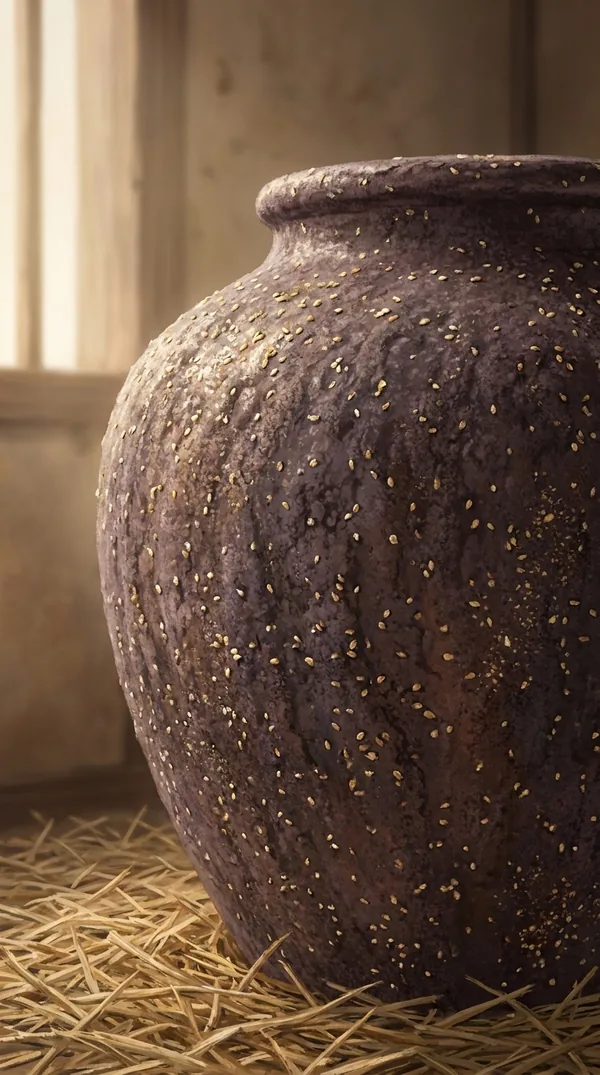
Bizen ware 備前焼 is the general name. Inbe ware 伊部焼 is a part of it.
Within Bizen ware, pieces of purple clay with a sesame-like glaze, 胡麻釉, and a surface likened to the bark of the enoki tree — enoki-hada 榎肌 — are sometimes called Inbe ware in particular.
06 · 盆器
Bizen bonsai pots
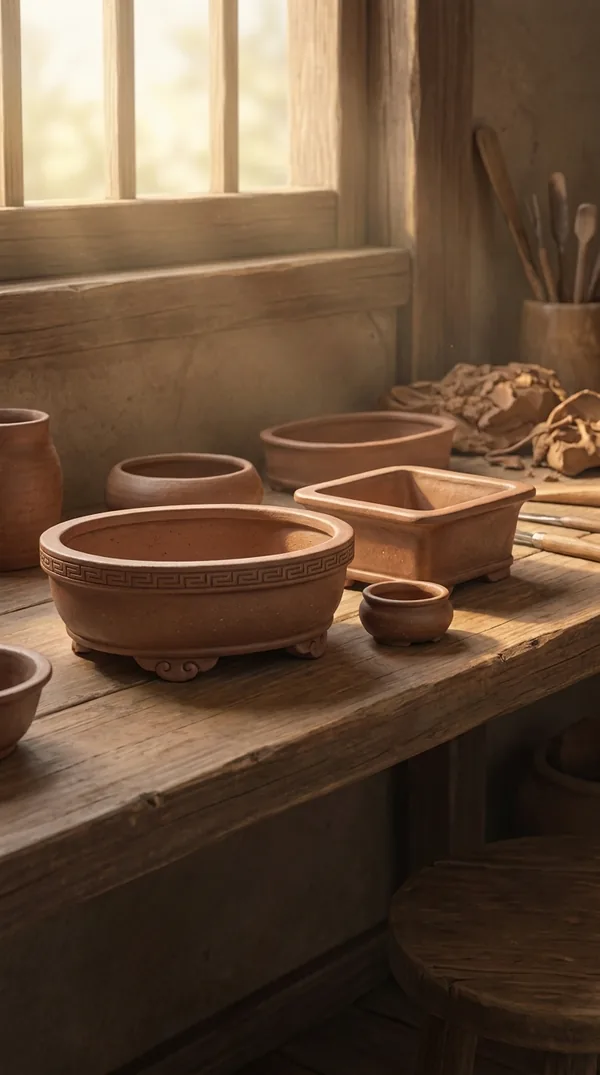
The record does not say when Bizen began making bonsai pots. What it does show is a small, varied group: most of them unglazed, from a tiny pot to a large round one.
Fret band
A shudei oval
A vermilion-clay oval with a thunder-fret band, 21.2 cm long and marked on the base. Its clay and its form are both described as having an air of old elegance.
Small
A rectangle with a turned-out rim
An unglazed small rectangle, 10.2 cm long, with natural glaze over a lustrous purple clay.
Very small
A tiny round pot
An unglazed round pot with an outer rim, 5.2 cm across, said to be Ko-Bizen.
Large
A pot that was once for cooking?
An unglazed round pot shaped like a hanging pot, 34.5 cm across. The record suggests it may first have been an earthen cooking pot.
Tray
A water tray
An unglazed rectangular water tray with an arabesque pattern, 16 cm long, handed down as Ko-Bizen. A fine piece of work, with a cool, dark lustre from ash glaze.
In use
A black pine
A black pine 85 cm tall, planted in a Bizen rectangle with a thunder-fret pattern.
“Said to be” Ko-Bizen
Ko-Bizen 古備前 means “old Bizen”. Of the pots above, one is said to be Ko-Bizen and another is handed down as Ko-Bizen. The record gives no date for either, and we keep its wording: a tradition about a pot is not a date.
A vessel put to new use
The record suggests that the large round pot may first have been made as a cooking pot. It is a reminder that not every bonsai pot began as one.
07 · 落款と見方
Reading a Bizen mark
One recorded Bizen pot carries a mark: the vermilion-clay oval with the thunder-fret band.
The mark
大日本伊部陶
Dai Nippon Inbe tō — “Inbe pottery, Great Japan”. Five characters impressed in two columns inside a rounded rectangular frame.
What it says
A place, not a person
The mark names Inbe, the place. It does not name a potter, and the record does not say who made the pot.
What it does not say
No date
The record gives no date for this mark or this pot. We do not date it.
This is one documented form, not a complete list, and a mark is evidence to weigh, not proof. The marks index sets out the marks recorded so far on this site. If a mark puzzles you, send us a clear photograph and we will tell you what it says — we do not issue authentications.
08 · YAKUMO と備前

Bizen at YAKUMO JAPAN
We do not have Bizen pots listed at the moment, and our eBay store has no Bizen section. Our pots are grouped there by kiln and origin; the link below opens that section, so it always shows what is available now. The pictures on this page are illustrations, not pots for sale.
Browse bonsai pots by kiln and origin on eBay →
Listings ship from Tokyo; destination availability and terms are shown on eBay.
09 · Continue
Keep reading
The marks, clays and forms on this page each have more to say on their own pages.