Places · 無名異焼
Mumyōi
Sado’s red clay from the gold mine — and the bonsai pots made from it
Mumyōi ware comes from Sado Island and takes its name from iron-rich red soil associated with the island’s gold mine. Bonsai pots were made there from 1957.
On Sado Island, potters use iron-rich red soil associated with the island’s gold mine. This material is called mumyōi, and the ware takes its name from it. Bonsai-pot production began there only after Uematsu Tōsui’s 1957 visit; Kanayama was the kiln he taught.
00 · At a glance
Mumyōi, in four points
Clay
From the gold mine
Iron-rich red soil associated with the Sado gold mine.
Ware
Unglazed red and purple
High-fired red and purple clay with a soft natural sheen.
Bonsai pots
From 1957
Taught at the Kanayama kiln after a visit by Uematsu Tōsui.
Marks
Two documented here
“Sado” and “Kanayama” seals; a “Jōzan” seal.
01 · 無名異
A clay named after the mine
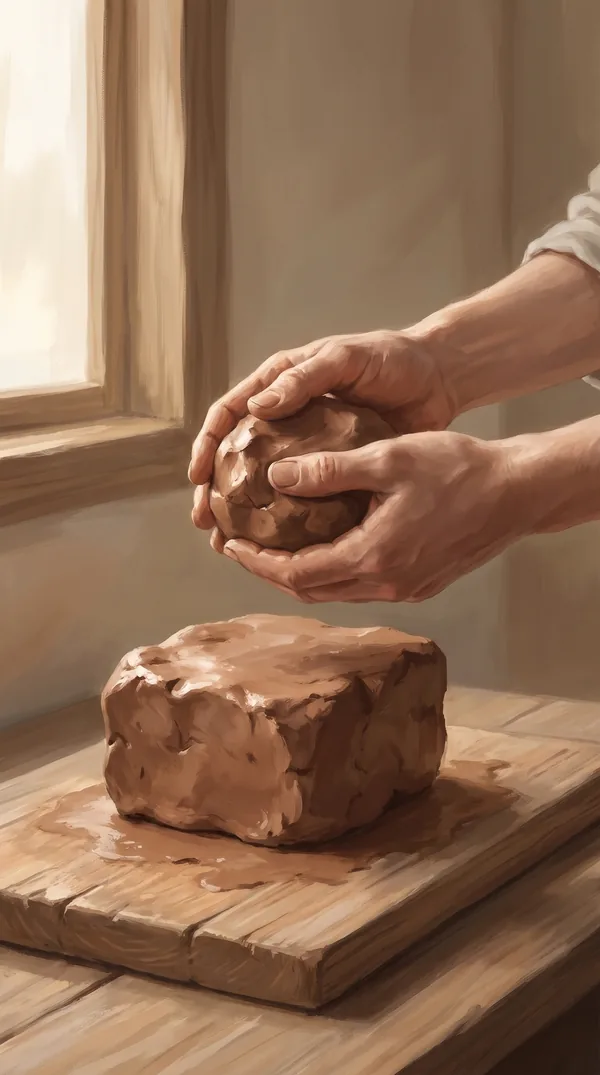
Mumyōi is iron-rich red soil associated with the Sado gold mine. The record followed here describes it as soil formed as ore weathered; locally it is called mumyōin.
The best-known Mumyōi pieces are unglazed, high-fired red and purple clay — shudei and shidei — with a soft natural sheen and a smooth, almost moist-looking skin. Glazed pieces exist too, but the island is known above all for unglazed teapots, cups, vases and sake vessels.
02 · はじまり

Beginnings on Sado
An unsuccessful attempt is recorded in the An’ei era (1772–80). In 1857 Itō Tomitarō established the practical foundation of the high-fired ware; he adopted the art name Sekisui in the early Meiji period.
In the early Meiji years, Miura Jōzan improved the methods, and “Jōzan ware” became another name for Mumyōi ware.
In 2024 Sado Mumyoi-Yaki was designated a Traditional Craft by Japan’s Minister of Economy, Trade and Industry.
03 · 盆器
Bonsai pots arrive: 1957
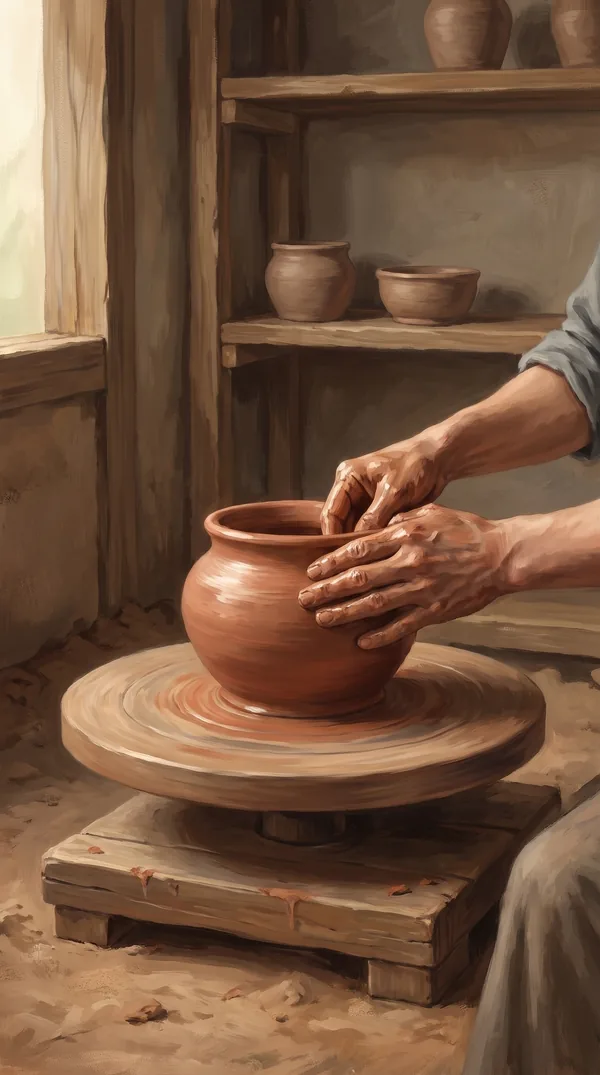
Bonsai pots came late. In 1957 Uematsu Tōsui visited Sado. He toured the island’s kilns — about five at the time — and chose the Kanayama kiln, founded in 1947, as the one to teach.
He taught shapes that suited the potters’ skill on the wheel — rounds and ovals — and from them the kiln developed a range of shapes and decoration.
Kanayama continued making bonsai pots after Tōsui’s death, until about 1965, and ceased operations in 1977. It was also said to have trained many of the Mumyōi potters active at the time of the account.
04 · 作例
What the pots look like
The pots recorded for this ware are mostly round, in glossy red clay:
- a deep, bowl-shaped round in red clay with small rounded feet, about 19 × 8 cm, carrying a Jōzan mark;
- a small round with an incised landscape, about 9 × 7 cm;
- a round in darker red clay with a painted band of flower scrolls, about 11 × 7 cm;
- a shallow round with a beaded rim and a cord line below it, about 9 × 3.5 cm.
A small Shimpaku juniper, 13 cm tall, is shown planted in a red Mumyōi round.
05 · 落款
Marks
Two marks are documented here — not the full set the potters used.
If your pot carries a different mark, it may still be Mumyōi. Send us a photo and we will tell you what the mark says and whether it matches a form documented here.
06 · 見方
Reading a red pot
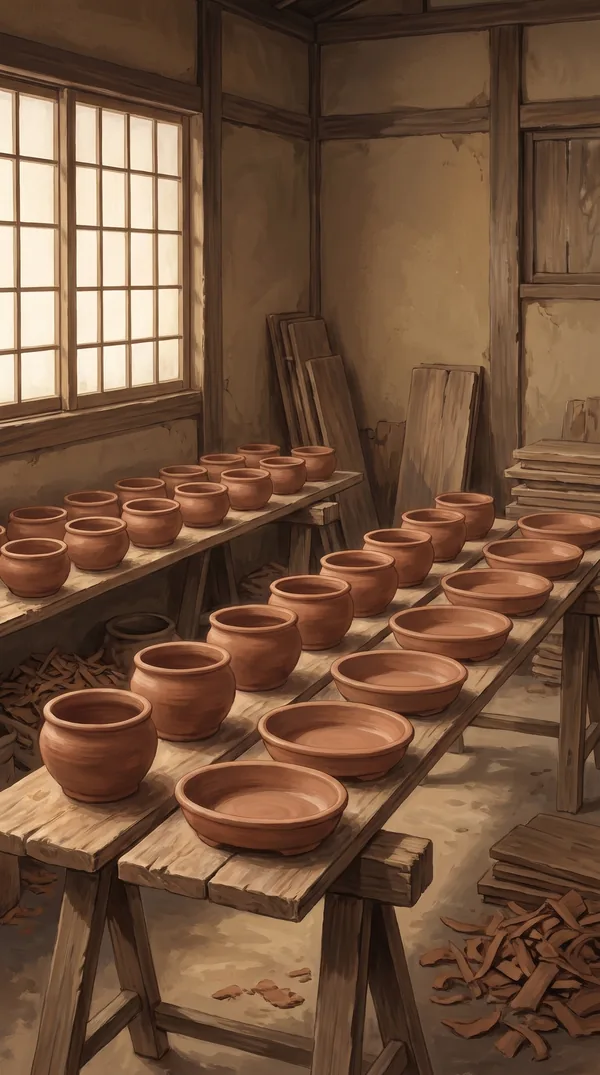
Glossy unglazed red clay is not unique to Sado. Colour, surface and a recorded mark may help with reading a pot, but none of them establishes origin or authenticity by itself.
07 · YAKUMO と無名異焼
Mumyōi at YAKUMO JAPAN
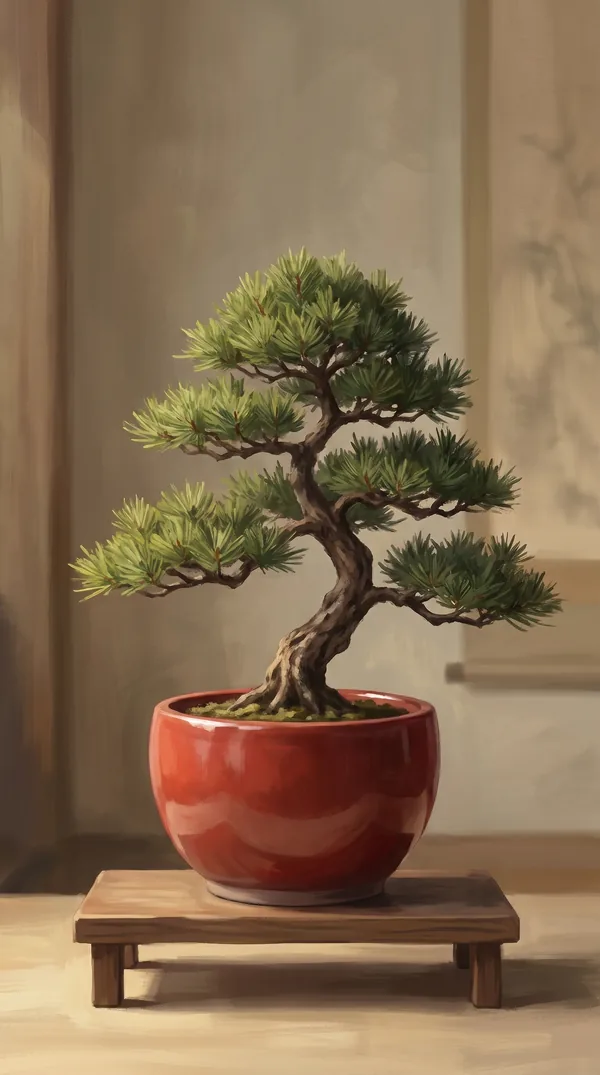
We do not have a Mumyōi pot listed at the moment. Our pots are grouped on eBay by kiln and origin. The pictures on this page are illustrations, not pots for sale.
Browse bonsai pots by kiln and origin on eBay →
Listings ship from Tokyo; destination availability and terms are shown on eBay.
08 · Continue
Keep reading
Clay, glaze and other kilns each have more to say on their own pages.