Places · 湖東焼
Kotō
A domain kiln that copied wares from kilns across Japan — and made bonsai pots among them
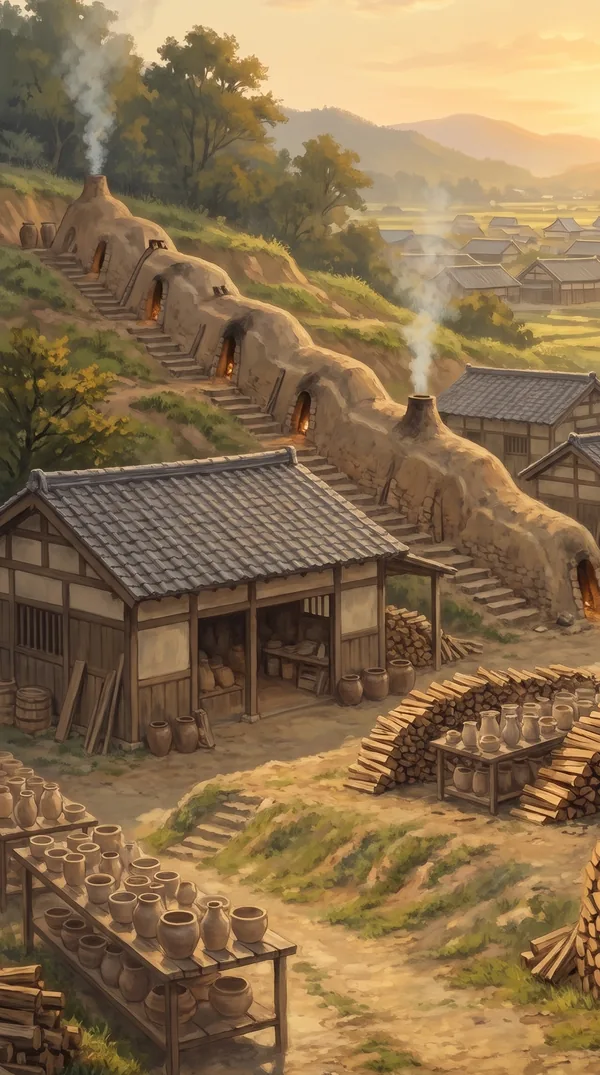
Kotō ware comes from Hikone in Ōmi, from a private kiln taken over by the domain. It copied wares from kilns across Japan, which makes a Kotō pot hard to place.
Kotō ware began in Hikone, in Ōmi (now Shiga), in 1829 as a private kiln established by townsmen. The Hikone domain took it over in 1842, and under Ii Naoaki and Ii Naosuke it expanded, invited potters from Kyoto, Seto and Kaga, and produced wares in a wide range of styles. The bonsai-pot examples recorded on these two source pages are the subject of this page.
00 · At a glance
Kotō, in four points
Kiln
Private, then the domain’s
Begun by townsmen of Hikone in 1829; taken over and run by the Hikone domain from 1842.
Dates
1829–1895
A domain kiln from 1842 to 1862, with private production before it and small-scale production by former kiln workers afterward.
Style
Copies of many wares
Underglaze blue as its principal line, with copies of wares from kilns across Japan.
Bonsai pots
Small and varied
The five unplanted entries with listed dimensions run from 7.2 × 7 cm to 20 × 18 cm: Kōchi-style, green-glazed relief, red-enamelled and gold-decorated.
01 · 御庭焼
From a private kiln to the domain’s
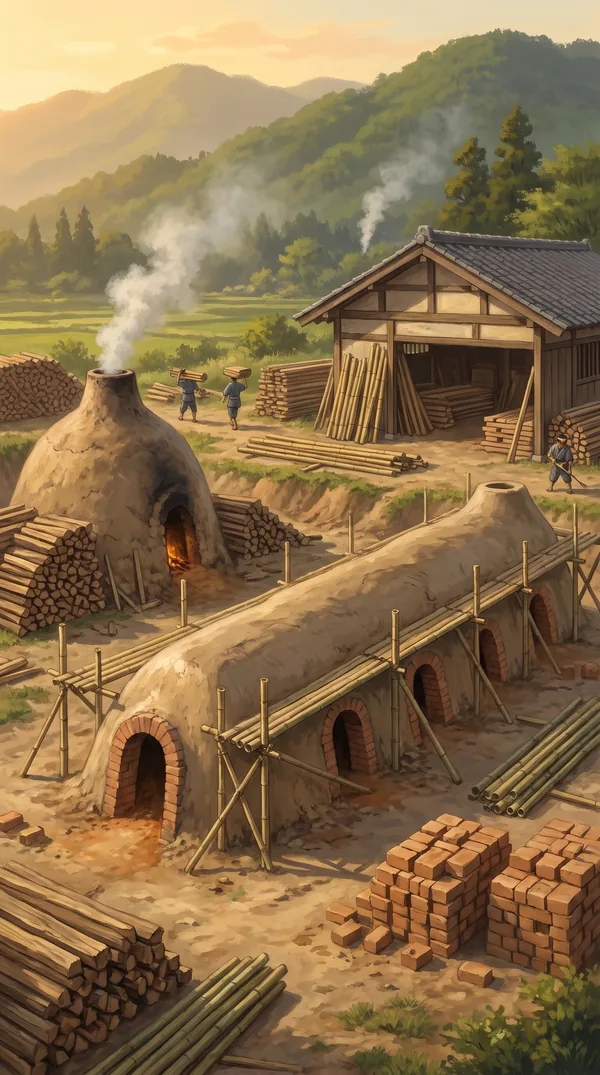
Kotō ware began in 1829 as a private kiln, started by townsmen of Hikone. In 1842 the Hikone domain took it over and ran it itself, and it became one of the kilns Japanese call 御庭焼, a lord’s garden kiln.
-
1829
A private kiln
Townsmen of Hikone start a kiln.
-
1842
The domain’s kiln
The domain takes it over and runs it, under the lord Ii Naoaki.
-
Under Naosuke
Enlarged
Ii Naosuke, who succeeded Naoaki and became chief minister (Tairō) of the shogunate, spends domain funds to expand it.
-
1860–62
The domain kiln ends
After Naosuke is killed in the Sakuradamon Incident in 1860, the domain kiln is scaled down, and in 1862 it is closed.
-
1895
The last kiln closes
Its equipment passed to former workers, who kept making wares on a small scale until that kiln too closed.
As a domain kiln, then, Kotō lasted about twenty years. For another domain’s garden kiln, see Kairakuen; for porcelain made for a domain, see Nabeshima.
02 · 招かれた名工
Master potters, invited
To raise its quality, the kiln invited noted potters — from Kyoto 永楽保全, 三代清水六兵衛, 三代和気亀亭 and 幹山伝七 among them — and master potters from Seto and Kaga as well.
From Kyoto
Named potters
永楽保全, 三代清水六兵衛, 三代和気亀亭 and 幹山伝七 are among those named.
From Seto and Kaga
Other centres
Master potters were invited from these pottery centres too.
03 · 写しの窯
Many wares, copied
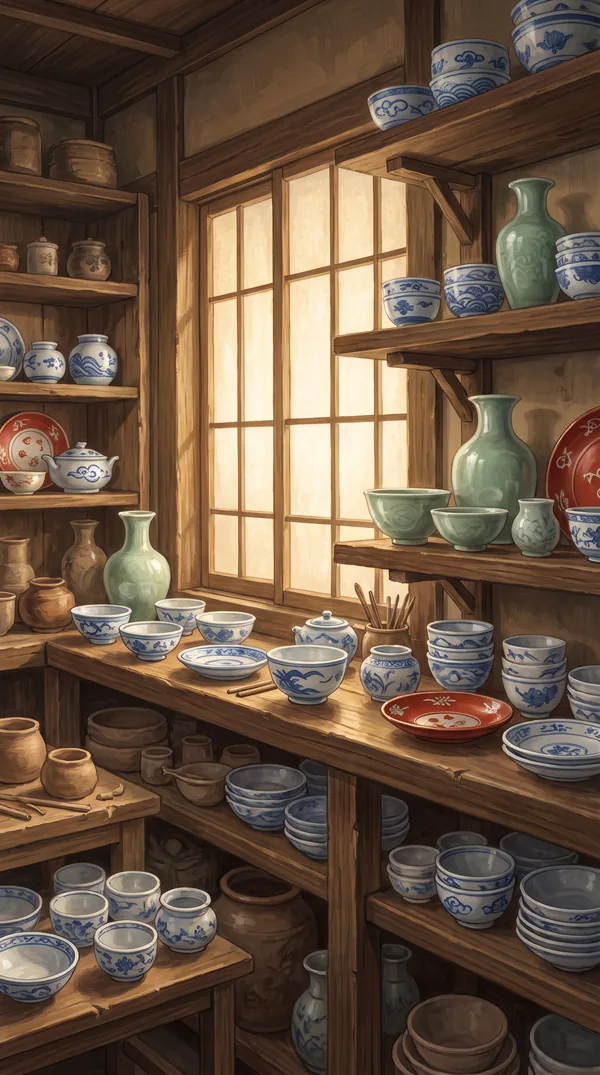
Being a large kiln, Kotō made a great deal, and in great variety. Underglaze blue (染付) was the principal line in the domain period. Its copies included akae (赤絵), celadon, Oribe, Shino and Takatori, drawing on wares from kilns across Japan; it is said to have imitated Annamese, Kōchi, purple-clay (紫泥) and Korean wares as well.
Main line
Underglaze blue
Underglaze blue was the principal line in the domain period.
Under Naoaki
Enamel and gold
Under Naoaki the kiln made especially fine overglaze-enamelled (錦手) and gold-decorated (kinrande) wares.
For Kōchi, celadon and other glazes, see Clay & glaze.
04 · 盆器
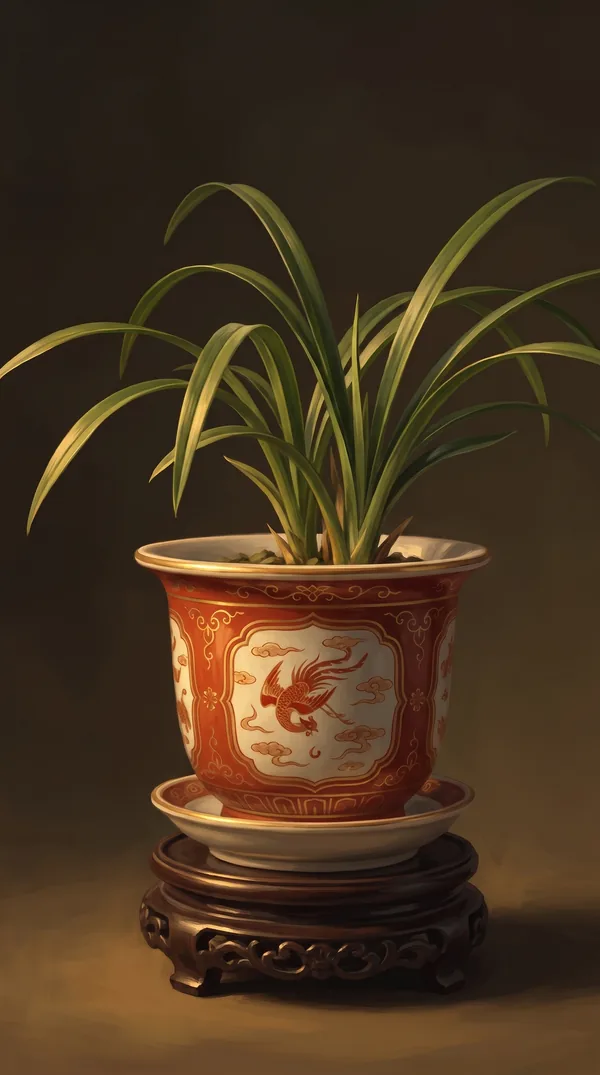
Kotō bonsai pots
The five unplanted entries with listed dimensions run from 7.2 × 7 cm to 20 × 18 cm; the source also shows one planted example without pot dimensions. With the source’s own comments where it gives them:
Rectangular · 12.5 cm
Green glaze, lions in relief
A green-glazed rectangle with lions in relief and a lug on either side.
Square · 7.2 cm
In the Kōchi manner
A small square pot copying Kōchi ware.
Rectangular · 8.5 cm
Seven sages, and a phoenix
Red-enamelled, with the Seven Sages of the Bamboo Grove on one face and peony and phoenix on the other. The source notes a restrained use of gold on both faces, suited to the pictures.
Hexagonal
Planted
The source shows a Kōchi-style Kotō hexagon planted with an oriental bittersweet (tree 14 cm tall and 23 cm wide).
Round · 20 cm · a pair
An orchid pot in gold
A pair of kinrande orchid pots with matching saucers, painted in window panels with auspicious beasts and birds, with gold. Without the saucers, the listed height is 15.3 cm. Another pair with different pictures is known; apart from lacking the blue glaze, it is much the same.
Rectangular · 17 cm
Stylised flowers
Painted with stylised flowers. A little shallow front to back, but a shape that would not look out of place today; the source suggests it was made as a tree pot.
Five unplanted entries — one of them a pair — and one planted example are the whole of what the source shows. They span Kōchi-style, green-glazed relief, red enamel and kinrande; they do not describe Kotō ware as a whole.
05 · 見方
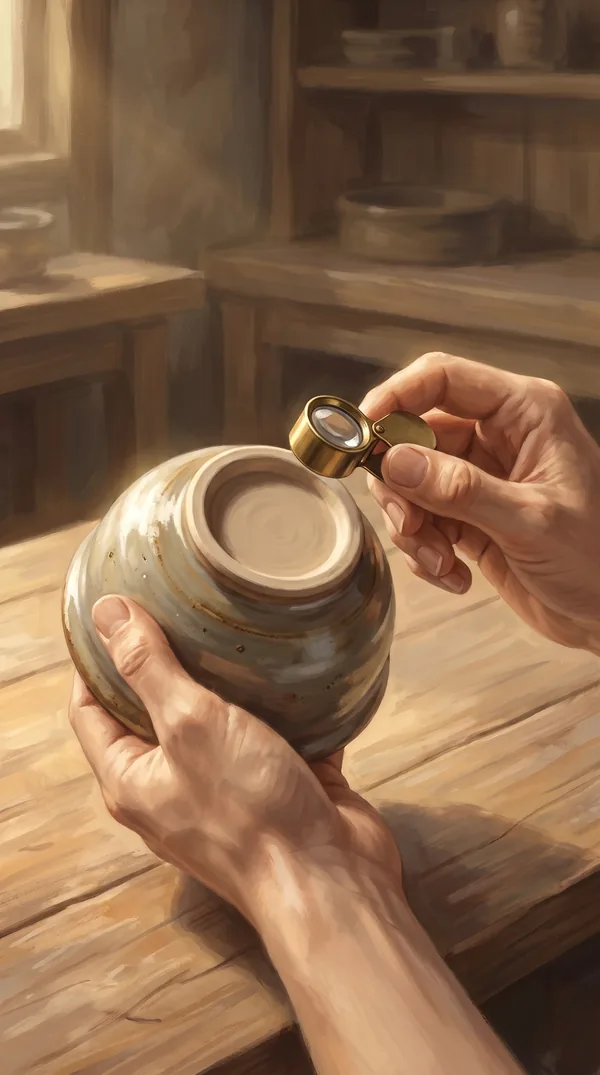
Reading a Kotō pot
Kotō copied the wares of many kilns. On the evidence presented here, style alone is not sufficient to identify a pot securely as Kotō ware.
If a mark puzzles you, send us a clear photograph and we will tell you what it says.
06 · YAKUMO と湖東焼
Kotō at YAKUMO JAPAN
Current availability changes. Our pots are grouped on eBay by kiln and origin; the link below opens that section, so it always shows what is available now. The pictures on this page are illustrations, not pots for sale.
Browse bonsai pots by kiln and origin on eBay →
Listings ship from Tokyo; destination availability and terms are shown on eBay.
07 · Continue
Keep reading
The kilns and glazes on this page each have more to say on their own pages.