Makers · 作家 · Tokoname
Senshu
仙舟He knew Shūzan first as a fellow bonsai grower, and they were friends for twenty-five years. After Shūzan died he took over the clay, the forming and the firing.
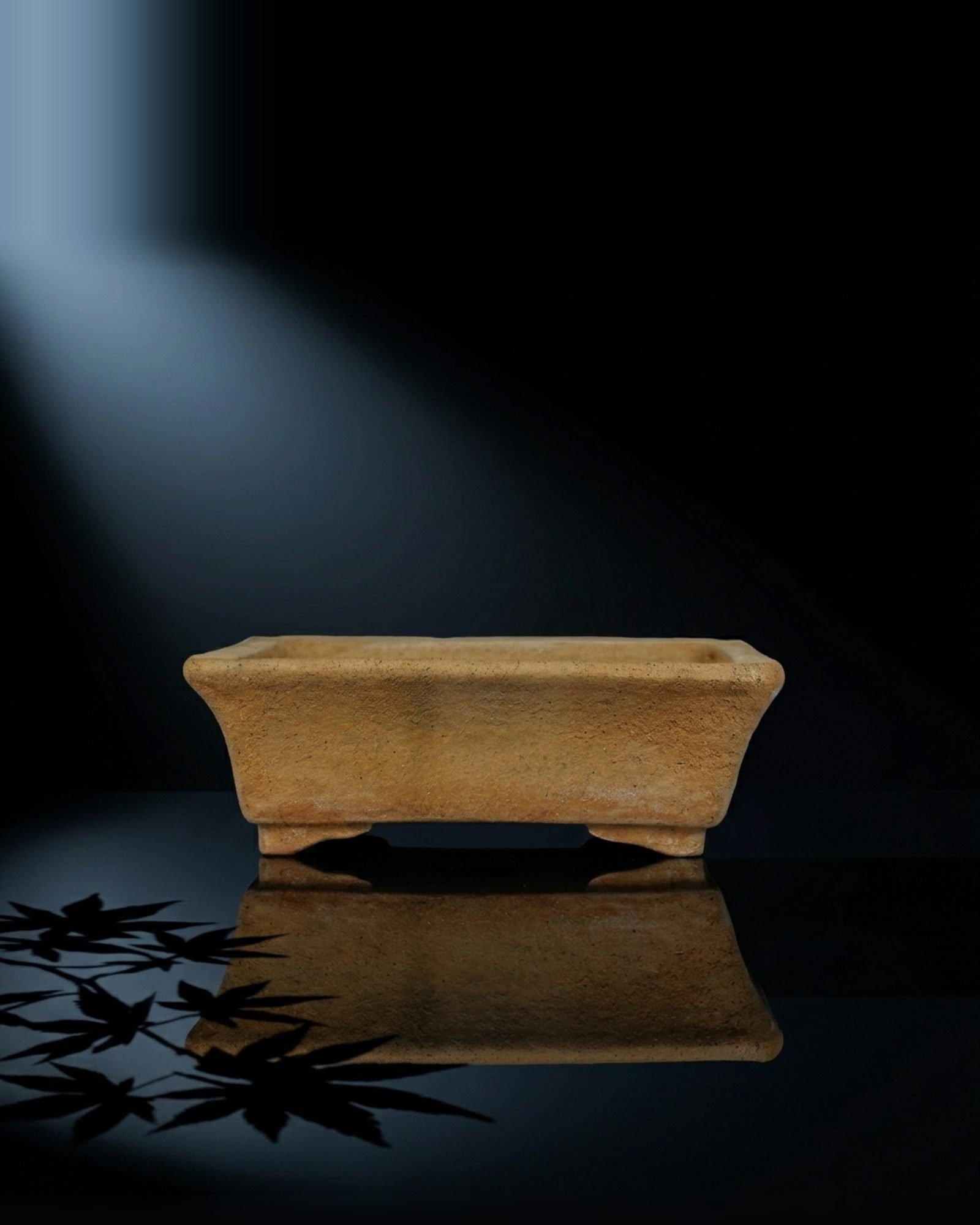
At a glance
- Art name
- Senshū 仙舟
- Real name
- 小澤数雄
- Region
- Tokoname
- Teacher
- Shūzan 舟山 — whom he first knew as a fellow bonsai grower
- Standing
- The only pupil carrying on Shūzan’s line
- Forms
- After Shūzan’s. Rectangles for the most part; ovals and rounds rare
- Sizes
- Medium and large. 50–60 cm is common; under 45 cm is uncommon
- Clay
- Brighter in colour and more refined than Shūzan’s
- Output
- Small. One-off handwork, with almost no production pieces
- Documented form
- 仙舟 — two characters, no square frame
01 · 経歴 His life
Twenty-five years, and one successor
He did not come to Shūzan as a potter. He came as a bonsai grower who felt strongly about his character and his views on bonsai, and the two were friends — teacher in pots, friend in bonsai — for twenty-five years.
When Shūzan died, Senshū took on the clay blending, the forming and the firing, and makes 舟山写 — Shūzan copies. He got through the technical difficulties by holding to Shūzan’s attitude to the work.
He did not stop at copying: he worked up a clay of his own, for a new body.
In time the growers around him came to rate the pots highly enough that trees planted in them were accepted for the Kokufū exhibition.
As things stand, he is the only pupil carrying Shūzan’s line, and a successor is awaited.
The only pupil carrying Shūzan’s line.
02 · 作風 The work
Fewer pots, and a lighter clay
He began late and works one pot at a time, so there are not many. The near-absence of production pieces is what sets him apart from an ordinary professional.
The forms follow Shūzan’s for the most part — rectangles chiefly, ovals and rounds rare. The sizes follow too, medium and large, with 50–60 cm common and pieces under 45 cm uncommon.
The clay is where they separate. The near-rough strength that often showed in Shūzan’s pots has gone quiet; Senshū’s clay is brighter in colour and the more refined of the two, and of one piece it is said that the finish and the clay are better than Shūzan’s own.
Because each is made singly, no two come out quite the same colour — one running red, others running blue, and some finishing close to white clay.
03 · 落款 The mark
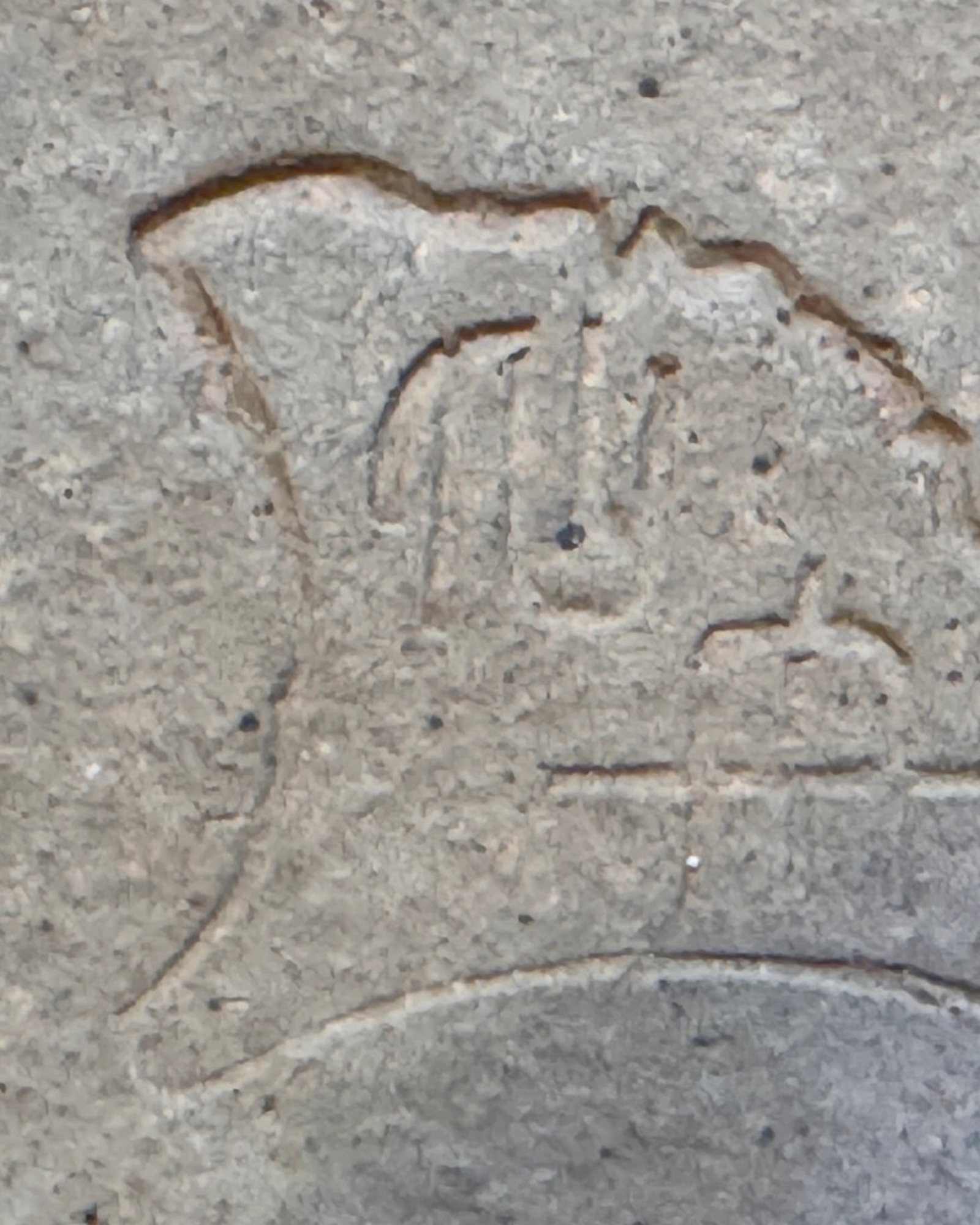
仙舟, on the base
Why the foot decides it here
仙舟 — Senshū. Two characters in a loosened seal-script style, joined into an irregular outline without a square frame.
This matters more here than on most pages. He took over Shūzan’s clay blending, his forming and his firing, and makes copies with them. So the clay will not separate the two, and neither will the form. The mark will.
Shūzan died in 1988. A pot in the Shūzan manner made after that may well be Senshū’s.
On this pot it sits in the middle of the base, a little below centre, among the drainage holes, on the bare body.
04 · 代表作 Recorded works
Recorded works
Not for sale — works recorded for this maker. All four are large.
| Work | Size (cm) |
|---|---|
| Rectangle, outer rim, cut corners, framed panel, waist band | 54 × 41.5 × 15.5 |
| Rectangle, inner rim, indented corners, body band — among his largest | 64 × 48.5 × 15 |
| Square, outer rim, framed panel, waist band | 40 × 22.5 |
| Rectangle, everted rim, large cut corners, framed panel, waist band | 62 × 49 × 18.5 |
Available
Senshu pots in the collection
Senshu is committed to 一点物 ittenmono — one-off handwork. Almost nothing is made in runs, and pots of the same form can come out of the kiln in subtly different colours. Each ships worldwide from Tokyo.
Send us a photograph of the underside and we will tell you what the mark says.