Journal · 手記 · How to look
How to look at a bonsai pot: shape, glaze and marks
26 October 2026
Three useful ways to begin looking at a pot: the shape, then the surface, then the foot. Shown here on two pots from this week — an unglazed rectangle and a glazed oval.
01 · 形 Shape
Outline before name
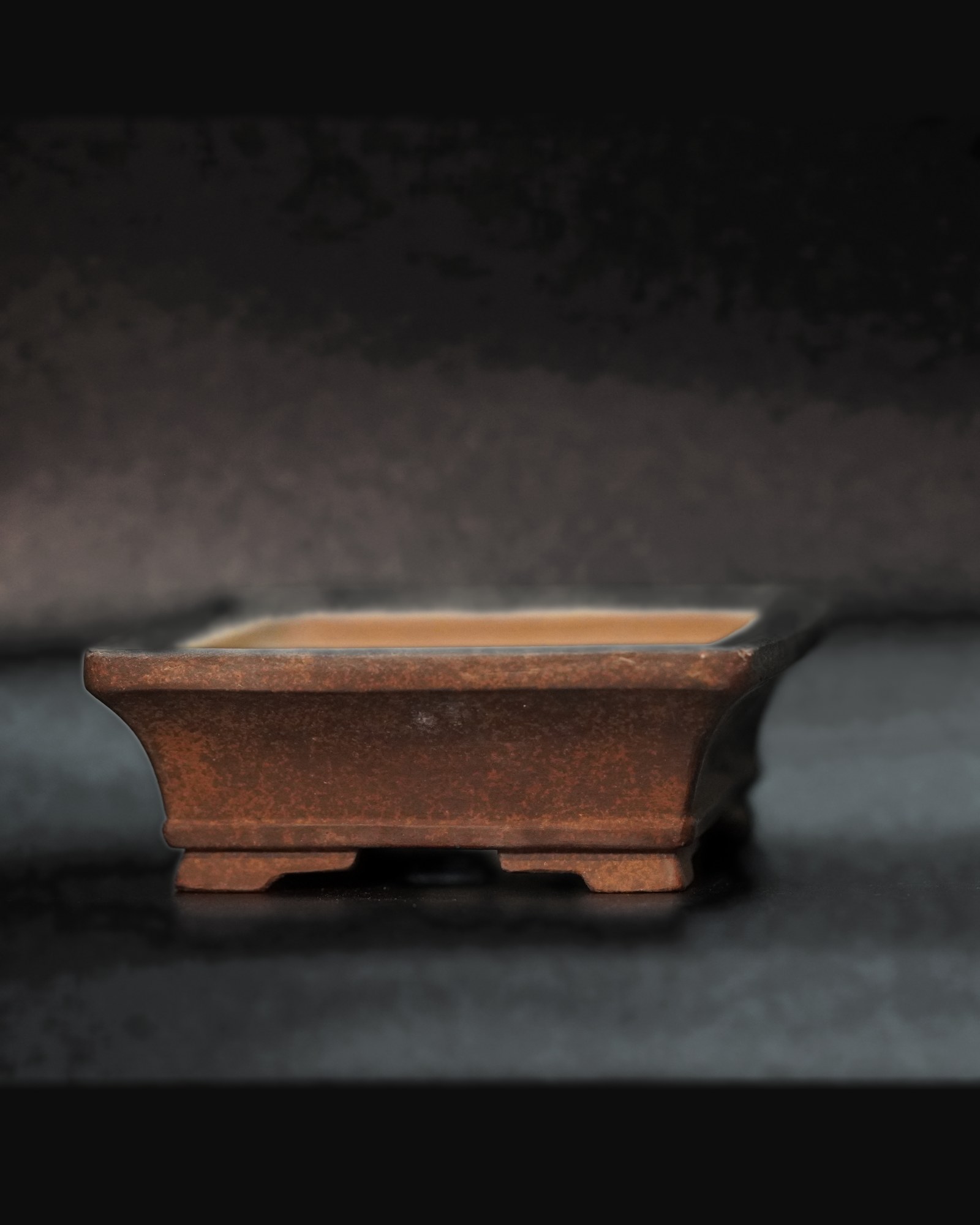
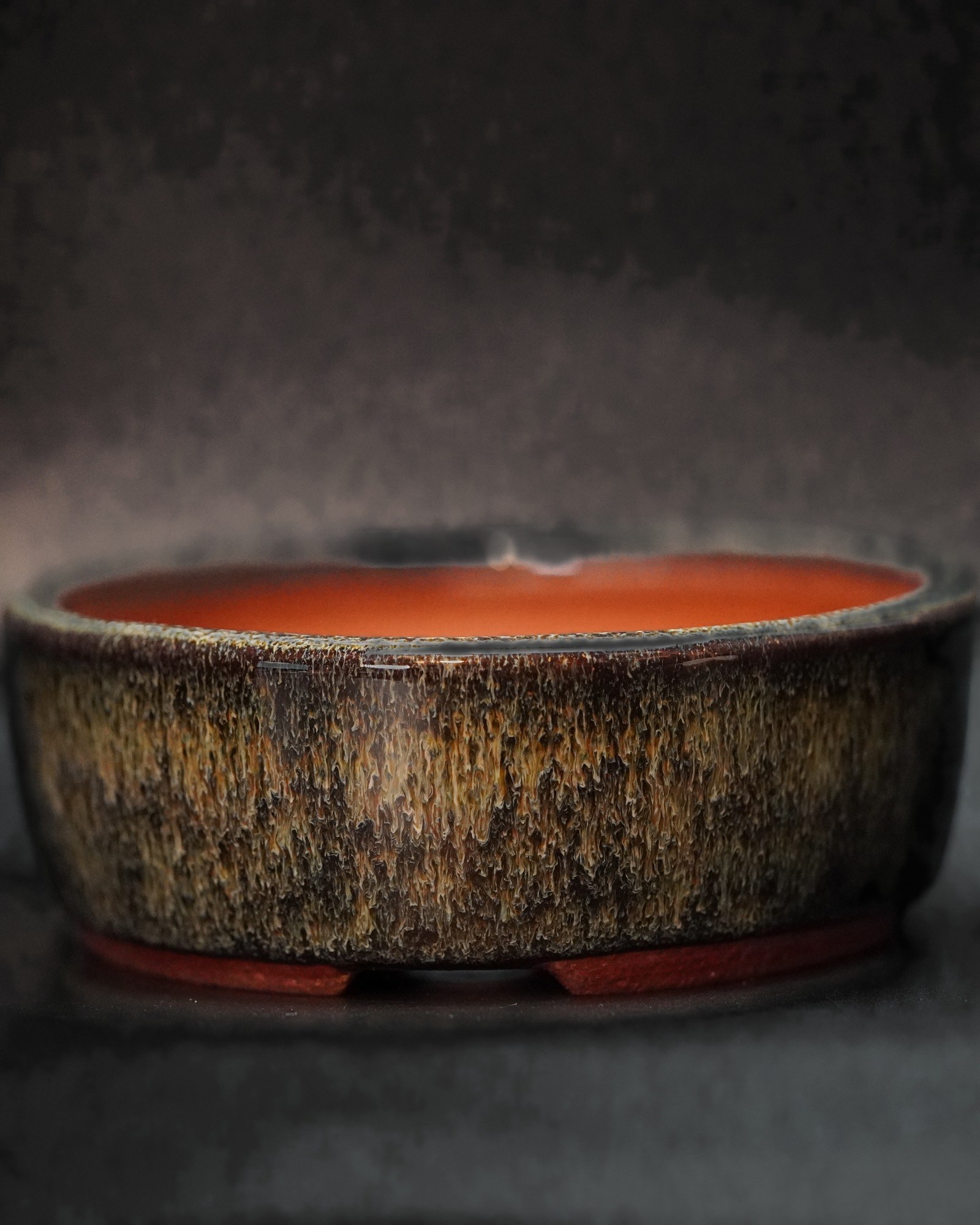
Look at the outline first: the rim, the walls, the feet. The Koho rectangle has a flared rim and cloud feet; the Eimei pot is an oval. Shape helps determine what kind of tree a pot may suit, before any question of maker or price.
02 · 釉 Surface
Glaze, or bare clay
Then the surface. The Koho pot is unglazed, so its character is in the clay and the edges. The Eimei oval is glazed in namako; with a glaze, look at how it gathers on the rim, how it thins over edges, and how it ends at the foot.
03 · 落款 The foot
Read the mark only as far as it goes
Last, turn it over. The Koho foot carries 光峰, which places the pot in the kiln’s moulded line rather than the hand-made line. The Eimei foot carries his own oval seal, 英明.
A mark tells you some things and not others. Read it for what it shows, and keep the rest open. If a mark is shallow, change the light before you change your reading.
Read further
- Koho: a pot from the moulded lineJournal, 22 October
- Eimei: thrown, or pressed and paredJournal, 24 October
- Turn the light, not the potJournal, 23 October
- Shape & SizeThe names of pot shapes
Ask us
A pot, a mark, a question?
Send us a photograph and we will tell you what we can see — and what the photograph cannot tell us.