Makers · 作家 · Tokoname
Yozan
耀山b. 1922
He set up on his own in 1963 and made small glazed pots. From the Shōwa 50s his son worked alongside him, and in time did the making — while the pots kept going out marked 耀山.
At a glance
- Art name
- Yōzan 耀山
- Real name
- 清水正和
- Born
- 1922
- Region
- Tokoname
- Before 1963
- A forming hand in Tokoname
- 1963
- Established his own pottery business
- Work
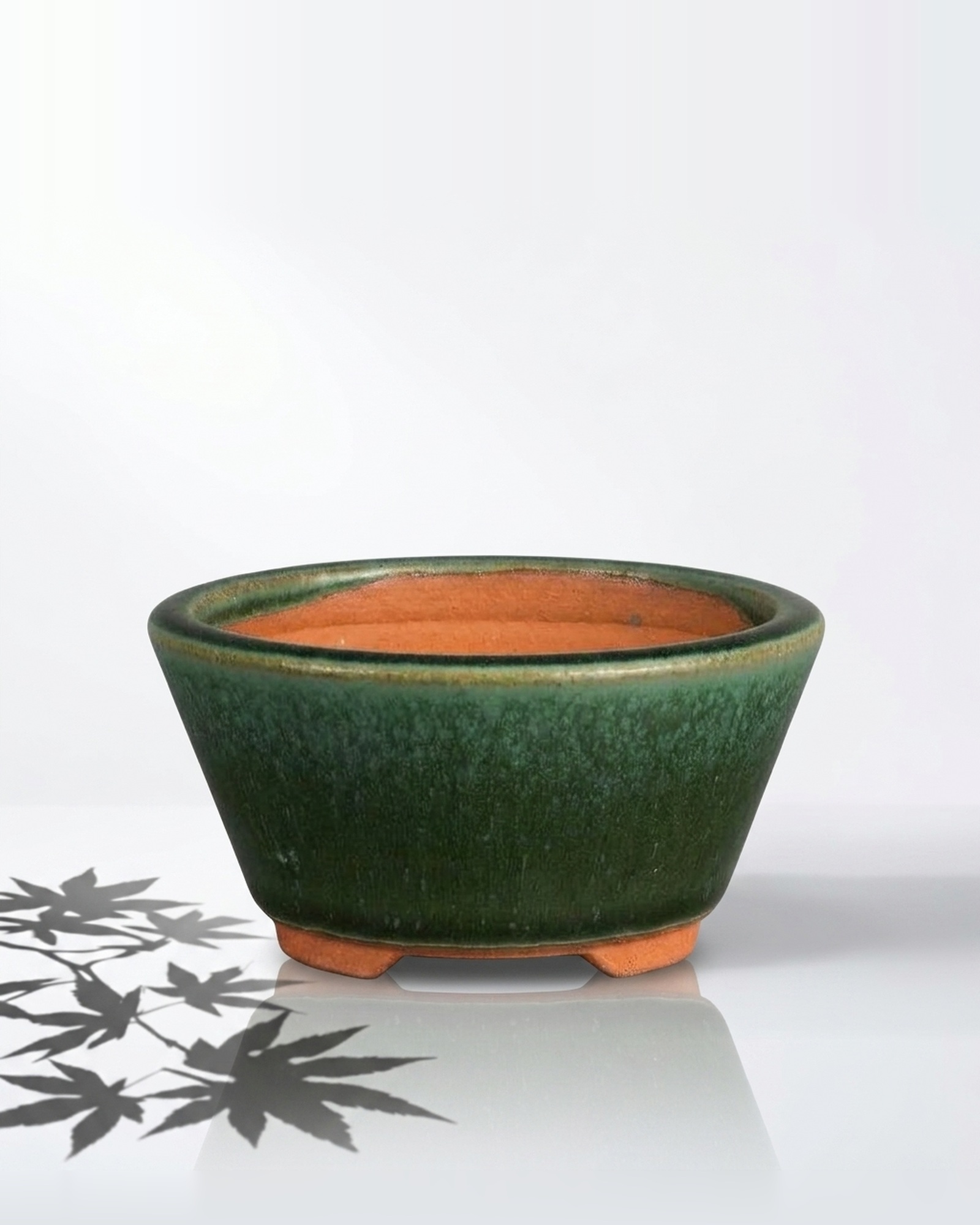
- Small glazed pots, hand-pressed. Wide in both form and glaze colour
- Known for
- Quiet colours and kiln-changed glaze. He helped carry the post-war enthusiasm for small pots
- Shōwa 50s (1975–1984)
- His son Eimei joined the workshop
- As of 2007
- Elderly, and making almost nothing
- Documented form
- 耀山, stamped
01 · 経歴 His life
The kiln, and then the son
He was a forming hand in Tokoname before he went out on his own, and established his own pottery business in 1963. What he made after were small glazed pots, hand-pressed, across a wide range of shapes and glaze colours.
He is credited with quiet colour and kiln-changed glaze, and with helping carry the post-war enthusiasm for small trees.
During the Shōwa 50s — 1975 to 1984 — his son Eimei joined the workshop, and brighter, more modern glazes came into the range with him. What followed is described as father and son working together, sending out small pots in quantity under the 耀山 name.
In time the son became the one doing the making — and the pots kept going out marked 耀山. A good many of them have the same character as the work later marked with his own name.
The son became the one doing the making. The pots kept going out marked 耀山.
As of 2007 he was elderly and making almost nothing, and the Yōzan pots then appearing on the market were taken to be old stock: a reddish body, and bright, varied glaze colour.
02 · 作風 The work
Glaze, across a wide range
Three pots are currently known for him, and all three are small and glazed.
One is a cockscomb-red round, popular and made in numbers — a graceful wheel-thrown form with a glaze to match. That glaze is thought to be Eimei’s creation or improvement, and as of 2007 it was in use on his work too.
One is a round in a colour between lapis and kin glaze, with fine runs of glaze coming down it. The feet are left bare, without glaze — not a fault in the dipping but a deliberate accent.
One is a set of five small rounds with an outer rim, in five colours: white kōchi, lapis-kin, namako, kin, and green. The namako is the one to look at: not the usual blue but something you would want to call black, close to a buckwheat glaze.
Sets like that were sold as production pieces and were relatively affordable at the time. A single pot in one of those five colours may well be part of a broken set.
03 · 落款 The mark
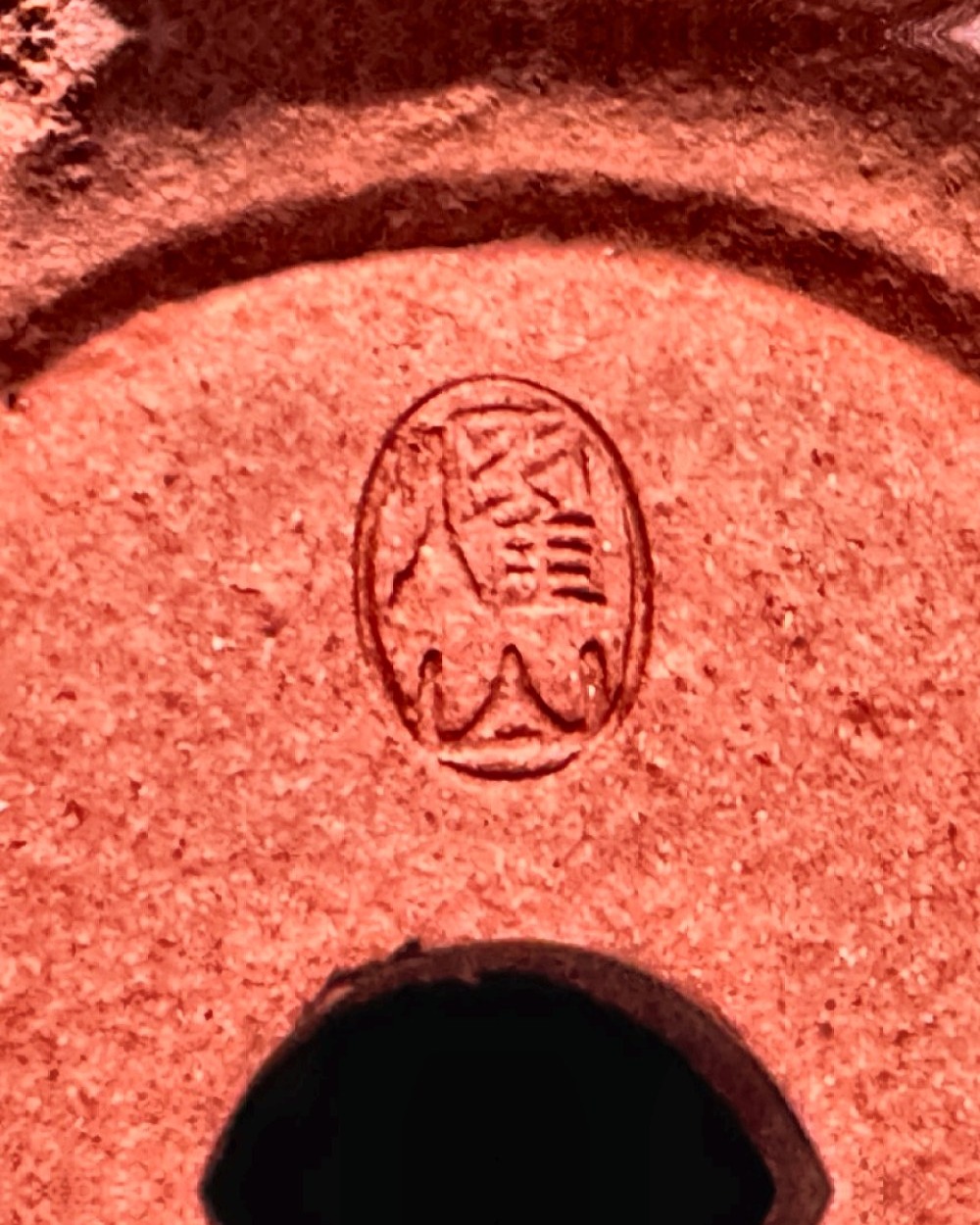
耀山, on the base
The mark is the kiln, not the hand
耀山 — stamped. Two impressions are documented for the mark. An oval impression is also confirmed, on the pot shown here: roughly 10 × 9.5 mm, alone on the base just above the large drainage hole, two characters one above the other, the lower reading 山. Whether it is one of the two documented forms has not been established.
The character is 耀, with the light radical — not 燿 with the fire radical. The two look alike in a worn impression, and they are not the same name.
And here is the point of this page. Two marks are recorded for the workshop, 耀山 and 英明. We set this one beside an Eimei oval from the same week: the characters are plainly different, so this is the 耀山 mark.
That settles which mark it is. It does not settle who made the pot. The son became the one doing the making while the pots kept going out under the 耀山 name, so the mark tells you the kiln and not the hand. Dating has to come from somewhere else.
04 · 代表作 Recorded works
Recorded works
Not for sale — works recorded for this maker.
| Work | Size (cm) |
|---|---|
| Round — cockscomb-red glaze. Popular, and made in numbers | 8.5 × 3.5 |
| Round — a colour between lapis and kin glaze, the feet left bare | 10 × 4 |
| Set of five small rounds, outer rim — white kōchi, lapis-kin, namako, kin, green | 12.8 × 5 |
Available
Yozan pots in the collection
A pot marked 耀山 is a pot from the Yōzan kiln. Each ships worldwide from Tokyo.
Send us a photograph of the foot and we will tell you what the mark says, and whether it carries.